Water spots on a polished faucet can appear before the rest of the bathroom is dry. Soap film gathers around handles, while mineral deposits leave pale rings near the drain. These small marks shape how clean a room feels, and how much time it takes to keep it that way. Stain Resistant Bathroom Fittings can help reduce visible buildup, but no surface stays spotless without care.
For 2026, this guide explores finishes and fixture features that may make everyday cleaning easier. It considers taps, shower fittings, and accessories, with attention to surface durability, water exposure, and practical maintenance. A smooth finish can wipe clean quickly, yet hard water and harsh cleaners may still dull or mark it. That detail is easy to overlook. Product descriptions also use terms like “resistant” differently, so check the manufacturer’s care instructions and material information before buying. A showroom shine is not the same as years of reliable use.
The right choice depends on your water, cleaning habits, and bathroom design. A brushed finish may hide fingerprints better than a mirror-like one, while accessible edges can make wiping simpler. Still, appearance alone cannot confirm long-term performance. The sections ahead offer a grounded way to compare options, spot claims worth verifying, and choose fittings suited to real daily use—not just a fresh display.
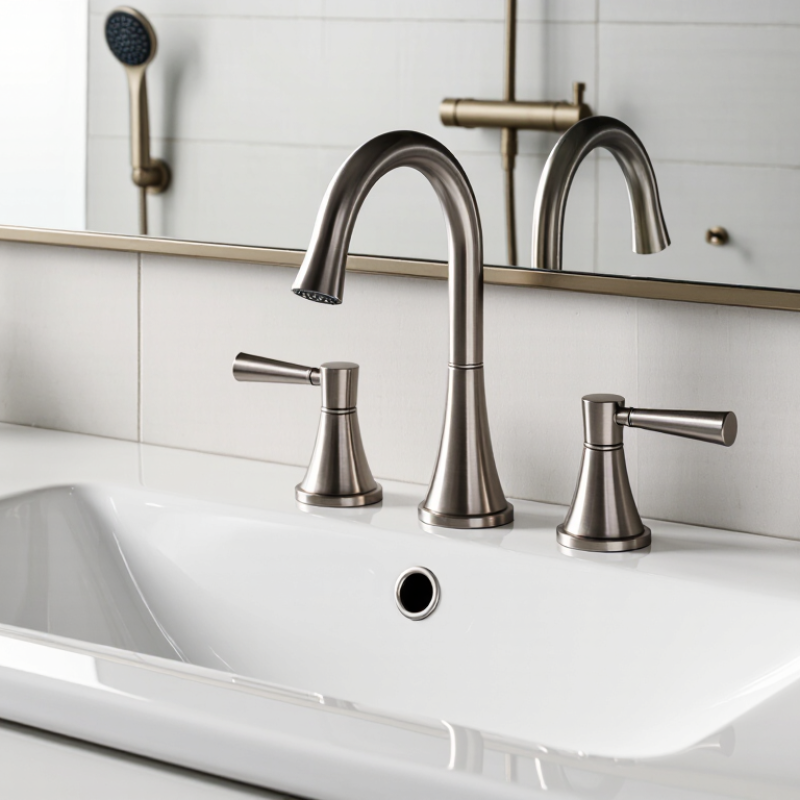
Define Stain Resistance: Water Spots, Limescale, Soap Scum, and Corrosion
Top Stain Resistant Bathroom Fittings for 2026?
Define Stain Resistance: Water Spots, Limescale, Soap Scum, and Corrosion
“Stain resistant” should describe how a fitting handles different residues, not promise a spotless surface. Water spots form when droplets dry and leave dissolved minerals behind. Limescale is harder: it builds up as calcium and magnesium compounds, especially around spouts and aerators. USGS water-quality guidance classifies water at 121–180 mg/L as hard and above 180 mg/L as very hard, measured as calcium carbonate. That scale helps explain why bathrooms in different regions need different cleaning routines. It is not a prediction of staining on its own.
Soap scum is a cloudy film formed when soap reacts with minerals in water. A soft cloth and mild detergent usually address it better than aggressive scrubbing. Corrosion is different. It can appear as pitting, discoloration, or damaged plating, particularly where moisture sits or harsh cleaners are used. Look for durable finishes and corrosion-resistant construction, but check care instructions before using descalers. Small details matter: water trapped at a handle base can leave marks by morning. And honestly, no finish is maintenance-free. A quick wipe after use helps, though it can be easy to forget.
Top Stain Resistant Bathroom Fittings for 2026? - Define Stain Resistance: Water Spots, Limescale, Soap Scum, and Corrosion
Ratings describe typical visible residue and upkeep for a well-made fitting in normal bathroom use. High means marks are generally less noticeable or easier to remove; actual results depend on water hardness, cleaning habits, finish quality, and installation.
| Fitting Finish | Water Spots | Limescale | Soap Scum | Corrosion Resistance | Practical Care Notes |
|---|---|---|---|---|---|
| Brushed stainless steel | High: the directional grain tends to make small spots less conspicuous than on a mirror finish. | Low: mineral deposits can form on any surface when hard water dries. | Medium: residue may collect along the brushed grain if it is not rinsed away. | High: 304 stainless steel is commonly used for corrosion-resistant fittings, but it is not immune to harsh chemicals or chloride exposure. | Wipe with a soft cloth and mild soap; follow the grain. Avoid steel wool and cleaners containing bleach or hydrochloric acid. |
| Brushed nickel | High: its muted, textured appearance usually disguises small droplets better than polished finishes. | Low: scale can still build up, especially around the aerator and handle bases. | Medium: regular rinsing helps prevent film from settling into the texture. | Medium to high: performance depends on the coating system and substrate; damaged or worn plating may be less protective. | Use a soft damp cloth and mild, non-abrasive cleaner. Check the fitting maker’s care instructions before using a descaler. |
| PVD-coated finish | Medium: spot visibility depends on the color and sheen; dark or glossy versions may show dried droplets. | Low: PVD does not prevent mineral deposits from forming on the surface. | Medium: rinse and dry regularly to limit visible soap film. | High when properly applied: a quality PVD coating can provide a durable surface, but performance depends on coating quality and the underlying material. | Clean gently with a soft cloth and mild soap. Abrasive pads and aggressive chemicals can damage the finish. |
| Polished chrome-plated brass | Low: its reflective surface makes dried droplets and fingerprints easy to see. | Low: mineral deposits are visible and can be difficult to remove if allowed to accumulate. | Medium: smooth surfaces are generally straightforward to wipe, but residue can remain visible. | Medium to high: intact chrome plating protects the substrate, but chips, worn areas, or poor-quality plating can expose the metal beneath. | Dry after use for fewer spots. Use a soft cloth and mild cleaner; avoid abrasives that can scratch the plating. |
| Matte black coated finish | Low to medium: droplets may dry as pale marks, particularly in hard-water areas. | Low: limescale is not prevented by a matte coating and may stand out against a dark surface. | Medium: the low-sheen surface can disguise some smudges, but soap residue still needs routine cleaning. | Medium to high: resistance depends on the coating type, application, and substrate; scratches or chips can compromise the surface. | Rinse and dry routinely. Use a soft cloth and a finish-compatible cleaner; avoid scouring powders and abrasive pads. |
| Polished nickel | Low: the bright, reflective surface tends to show water spots and fingerprints. | Low: hard-water deposits remain visible until cleaned. | Medium: smooth surfaces can be wiped easily, though residue shows readily on a polished finish. | Medium: protection depends on the plating and care; harsh cleaners can dull or damage the surface. | Wipe dry after use and use a soft cloth with mild soap. Avoid acidic or abrasive products unless the care instructions allow them. |
What “stain resistance” means here: water spots are dried droplets that can leave mineral traces; limescale is a harder mineral deposit commonly associated with hard water; soap scum is residue from soap reacting with minerals and mixing with body oils; corrosion is deterioration of the metal or its protective finish. No finish completely prevents these issues. Regular rinsing, drying, and finish-appropriate cleaning are the most reliable ways to reduce buildup.
FAQS
304 usually contains about 18% chromium and 8% nickel. 316 adds roughly 2–3% molybdenum, which improves resistance to chloride-related pitting.
Not always. It may suit coastal bathrooms or areas exposed to chloride-based cleaners. In a well-ventilated room, 304 may handle everyday splashes well.
No. Hard-water spots can collect around taps, joints, and drain covers. Even a good alloy needs regular care.
Look for a smooth finish and well-made welds. Poorly finished joints can trap water and residue. A small seam matters.
They can reveal early rust, blistering, or coating failure under controlled conditions. Ask for the full report and check the test method and sample preparation.
No. Test hours do not reliably translate into service years. A spotless test panel is not a guarantee; real bathrooms vary in humidity, water chemistry, and cleaning habits.
Hard water leaves mineral spots as droplets dry. At levels above 180 mg/L as calcium carbonate, deposits may form quickly around spouts and aerators.
Rinse away cleaner residue and dry fittings with a soft cloth. Check undersides and seams, where water lingers. Avoid abrasive pads; they can leave fine scratches. Test cleaners first.
Conclusion
Choosing Stain Resistant Bathroom Fittings for 2026 starts with understanding what “stain resistant” means: fittings should be easier to keep free of water spots, limescale, soap scum, and corrosion. Material matters. Grade 304 stainless steel typically contains about 18% chromium and 8% nickel, while grade 316 adds roughly 2–3% molybdenum for improved resistance in more corrosive conditions. ISO 9227 and ASTM B117 salt-spray methods can help assess corrosion performance, but their results are best treated as comparative indicators rather than guarantees of service life.
Finish quality is also important. Check coating adhesion using ASTM D3359 before comparing PVD and chrome finishes, since a finish that bonds poorly may be more prone to peeling or damage. Finally, match fittings and maintenance expectations to local water hardness: 0–60 mg/L as CaCO₃ is soft, 61–120 is moderately hard, 121–180 is hard, and above 180 is very hard. In harder-water areas, regular drying and cleaning can help reduce mineral buildup and visible spotting.