QUEO Luxury Bathroom — Design Journal & Articles

Design & Architecture Journal

Bathroom Insights & Trends

0%

Choosing a supplier for Designer Toilet Paper Holders involves more than comparing catalog photos. Buyers need to examine material quality, finish consistency, mounting design, and production capacity. A polished brass-look holder may suit a boutique hotel, while brushed stainless steel can work better in a busy family bathroom. Small details matter.

China has manufacturers and trading companies serving different order sizes and customization needs. This guide explores how to assess potential suppliers, from reviewing product specifications to requesting samples and checking packaging details. Ask about the base material, coating process, mounting hardware, and inspection procedures. A clear answer is useful; vague promises are not. That matters.

Supplier claims should be checked against practical evidence, including sample quality, factory documentation, communication, and agreed production timelines. Photos alone cannot show whether a concealed fixing feels secure or whether a finish marks easily after handling. Requesting a sample takes time, but skipping that step can cost more later. There is no single supplier that fits every project. Some buyers prioritize flexible designs, while others need stable production and predictable lead times. Even a detailed checklist has limits. Use it as a starting point, then confirm the details that affect your own order before making a decision.
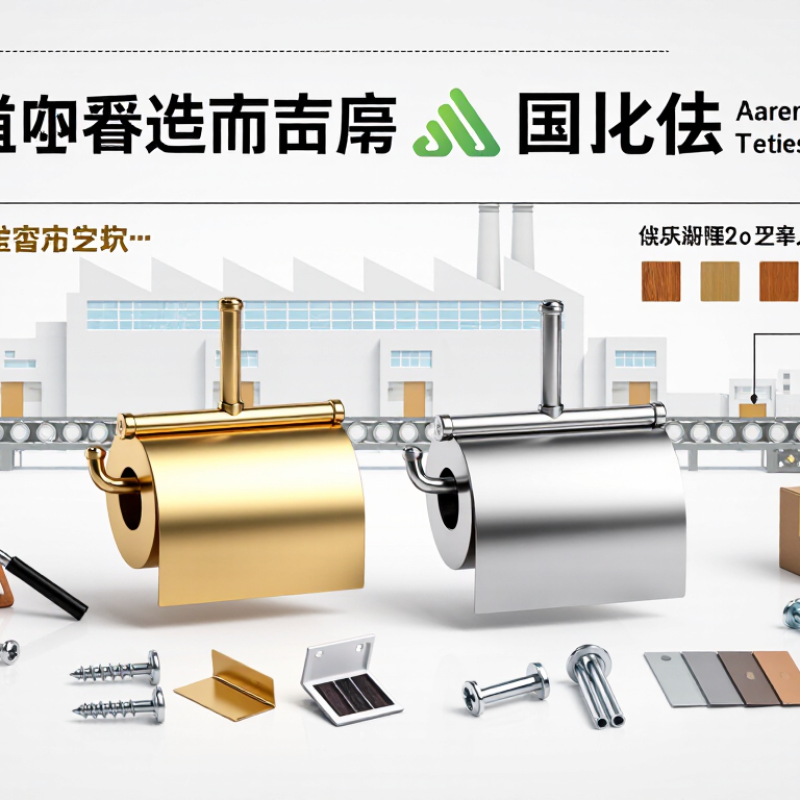
China Top Designer Toilet Paper Holder Suppliers?

What Is a Designer Toilet Paper Holder and How Is It Used?

What Is a Designer Toilet Paper Holder and How Is It Used?

A designer toilet paper holder is a bathroom fixture shaped around both function and visual balance. It may use a wall-mounted arm, a covered spindle, or a freestanding base. Materials such as brushed metal, ceramic, and sealed wood can echo nearby taps, tiles, or cabinet handles. Its job remains simple: keep a roll reachable, stable, and easy to replace.

Small detail.

Use the holder where a seated person can reach it without twisting or leaning. Check the roll’s path, door clearance, and nearby storage before fixing it in place. A freestanding model suits renters or changing layouts, but its base can crowd a narrow floor. A wall-mounted design saves floor space, though poor placement makes it awkward.

Placement matters.

Houzz’s 2024 U.S. Bathroom Trends Study found that median spending on major bathroom remodels reached $15,000 in 2023, up from $13,500 in 2022. That spending figure covers entire projects, not paper holders, but it shows why small fittings deserve careful coordination. A polished finish may photograph well and still feel cold beside warm stone; samples can look different under bathroom lighting.

How Are Designer Toilet Paper Holders Made in China?

Designer toilet paper holders made in China typically begin with a drawing that sets dimensions, mounting points, and the desired finish. Many use stainless steel, brass, or zinc alloy, chosen for different balances of strength, weight, and cost. Material selection affects how the holder feels in the hand and how well its surface handles moisture.

Metal parts may be cut, stamped, cast, or formed, depending on their shape and production volume. Workers then smooth edges, drill mounting holes, and assemble components such as the spindle and wall plate. Finishing can include polishing, brushing, or applying a plated or coated surface. Small details matter. A rough edge or slightly loose spindle can make a polished-looking product feel poorly made.

Quality checks often cover dimensions, assembly, surface appearance, and packaging. A practical supplier may inspect samples from a production run and check whether screws fit the intended wall plate. Buyers should compare a physical sample with the approved drawing, since photos can hide differences in color and finish. The process is not perfectly uniform across factories, and that is worth acknowledging. Clear specifications and repeat inspections help reduce surprises, though they cannot replace hands-on review.

Which Materials and Styles Do Chinese Suppliers Offer?

Chinese suppliers commonly offer toilet paper holders in stainless steel, brass, zinc alloy, aluminum, and ABS plastic. Stainless steel suits humid bathrooms, but ask for the exact grade and surface treatment. Brass feels substantial and can be polished or brushed. Zinc alloy allows more shaped details, while ABS keeps weight and cost down. Materials vary by factory.

Styles range from simple wall-mounted bars to covered holders, recessed units, and models with a small storage shelf. Finishes include brushed metal, polished chrome, matte black, and warm-toned coatings. Clean lines suit compact bathrooms. A shelf can hold a phone, though its edges should be checked for sharp corners. Small details matter.

When comparing samples, check how the roll fits and whether the spindle is easy to replace. Test the mounting plate against your wall type, and inspect screw covers and welds closely. A smooth finish in a catalog photo may look different under bathroom lighting. I would not choose by appearance alone; that is an easy mistake. Ask suppliers about coating consistency, corrosion testing, packaging, and available customization, then compare physical samples before confirming a specification.

How to Evaluate China-Based Designer Toilet Paper Holder Suppliers?

China Top Designer Toilet Paper Holder Suppliers?

How to Evaluate China-Based Designer Toilet Paper Holder Suppliers?

A polished holder should feel solid, sit level, and resist bathroom humidity. When evaluating a China-based supplier, request drawings, material specifications, and finish details. Confirm whether the product uses stainless steel, brass, or another stated material. Ask for relevant corrosion-test reports, and check that the tested finish matches your sample. A neat showroom sample is useful, but it cannot prove consistent production quality. Details matter.

Review the factory’s quality process, not only its quoted price. Ask how it checks mounting-hole spacing, surface scratches, and packaging before shipment. Request production samples and agree on measurable acceptance criteria. McKinsey’s 2020 supply-chain survey reported that 93% of respondents planned to make their supply chains more resilient. That figure is not specific to bathroom hardware, but it highlights why buyers should ask about backup materials, production capacity, and lead-time risks. Verify answers with records where possible.

Tips: Test a sample on the wall type used at the project site. Check screw fit, holder movement, and paper-roll clearance. Ask for clear photos of packed cartons and a written inspection report. If a supplier cannot explain a test result, pause and investigate. It is easy to overvalue a low price; I would not treat a single sample as enough evidence.

What Should Buyers Consider When Ordering from China?

When ordering a designer toilet paper holder from China, define the product before comparing quotations. Send a dimensioned drawing or clear reference photo. Specify roll width, arm direction, mounting-hole spacing, and whether fixing screws are included. Small details matter. Ask whether the holder is stainless steel, zinc alloy, or another material; request the material grade and finish, not just “metal.” For a brushed finish, check grain direction and color consistency under bathroom lighting. A sample can reveal loose joints, sharp edges, or a cover that catches the roll. Ask for proof. Request photos of the sample beside a ruler, and a material or finish report when relevant.

Confirm order terms in writing: sample cost, minimum quantity, production lead time, packaging, spare parts, and payment milestones. The lowest quote may exclude wall plugs or protective sleeves, leaving the product vulnerable to damage. Clarify carton protection and label details before production. Check how the supplier handles changes after approval; even a small screw revision can affect fit. For custom finishes, approve a physical sample and keep it as the comparison standard. Independent pre-shipment inspection can help verify dimensions, finish quality, and carton counts. Confirm that product documents and packaging meet your destination market’s requirements. Communication can be imperfect. Keep decisions in dated emails, not only in chat messages.

China Top Designer Toilet Paper Holder Suppliers? — What Should Buyers Consider When Ordering from China?
Buying Dimension What to Specify What to Verify Practical Buyer Note
Base material State the required material and grade for each component, such as stainless steel, brass, zinc alloy, or aluminum. Request a material declaration and, where appropriate, mill test documentation or other traceable material records. Material affects corrosion performance, weight, appearance, and cost. Do not rely on appearance alone to identify an alloy.
Finish and color Define the finish, color reference, gloss level, texture, and acceptable variation. Common options include polished or brushed metal finishes and plated or coated colors. Approve a production-representative sample and agree on a method for checking color and surface defects. Finish names can be interpreted differently by different factories. Use a physical sample or agreed color reference rather than a name alone.
Corrosion resistance Specify the intended bathroom environment and any required corrosion-test method, duration, and acceptance criteria. Ask for test reports that identify the tested finish, sample, method, and result. Confirm whether testing was performed by the supplier or an independent laboratory. Salt-spray results are comparative test evidence, not a guarantee of identical performance in every bathroom or cleaning environment.
Design and dimensions Provide dimensioned drawings showing overall size, roll capacity, projection from the wall, orientation, and installation clearances. Check the sample against the drawing, including edges, moving parts, alignment, and fit with the intended toilet-roll size. Confirm whether the holder is designed for a standard roll, a larger roll, or a specific product configuration.
Mounting and wall compatibility Specify the mounting type, fixing-hole positions, supplied hardware, and the wall types the product is intended to suit. Verify that the mounting plate, screws, anchors, and installation instructions match the target market and wall requirements. Wall anchors are not universally suitable for every substrate. State whether buyers or installers will source substrate-specific fixings separately.
Construction and load performance Define requirements for bracket thickness, joints, moving arms or covers, and expected everyday use. Agree on a repeatable inspection or functional test, such as checking attachment security, movement, sharp edges, and visible defects. Ask for the test setup and acceptance limits in writing; avoid relying on a vague description such as “heavy duty.”
Sample approval Request a sample that reflects the proposed material, finish, dimensions, mounting hardware, and packaging. Record the approved sample or signed specification and confirm that production will be checked against it. A sample made with a different finish or material may not represent the final order. Identify any sample-to-production differences before placing the order.
Quality control Agree on inspection stages, defect categories, inspection timing, and responsibility for inspection costs. Use written inspection criteria and request dated photos, inspection records, or an independent pre-shipment inspection where appropriate. Define acceptable cosmetic variation and critical defects before production; inspection criteria should match the product and order risk.
Packaging and transit protection Specify individual protection, accessory packing, carton quantity, outer-carton strength, labeling, and any retail-packaging requirements. Review a packaging sample and confirm that the product cannot easily scratch, rattle, or damage other items in transit. For finished metal surfaces, request protection that prevents abrasion and moisture exposure during handling and shipping.
Order quantity and pricing Request a quotation stating quantity, unit price, tooling or setup charges, sample fees, packaging costs, and quotation validity. Compare like-for-like specifications, including material grade, finish, hardware, packaging, and inspection scope. Minimum order quantities and price breaks are supplier-specific. Confirm them directly rather than assuming a standard industry quantity.
Production schedule Ask for sample timing, production lead time, order milestones, and the point at which the schedule begins. Get written confirmation of the production start condition, such as deposit receipt, final specification approval, or packaging approval. Lead times vary with order size, finish, capacity, and component availability. Allow additional time for sampling, revisions, and shipping.
Compliance and market requirements Identify the destination country and check which product, chemical, labeling, or packaging rules apply to the specific item. Request relevant declarations or test reports and verify that they cover the actual product materials and intended market. Do not assume that a general certificate covers every market or product configuration. Confirm applicable requirements with a qualified compliance professional when needed.
Shipping and trade terms Specify the named delivery location, agreed Incoterm and version, shipping method, carton details, and required export documents. Confirm who arranges freight, insurance, export clearance, import clearance, and payment of duties under the agreed term. Incoterms allocate specific responsibilities and costs; they do not replace the sales contract or determine product quality.
Payment and order protection Document the payment schedule, production approval points, remedies for nonconforming goods, and cancellation terms. Ensure the purchase order, quotation, approved specification, and sales contract are consistent. Use clear written terms and a traceable payment channel. Avoid making final acceptance dependent only on informal messages.
Design ownership and customization Clarify ownership or permitted use of drawings, tooling, samples, and customized designs. Put confidentiality, tooling access, and restrictions on use or resale in the written agreement where relevant. Confirm that any design, logo, or artwork supplied for production is authorized for use in the intended market.

FAQS

What is a designer toilet paper holder?

It keeps a roll within reach while matching nearby taps, tiles, or cabinet handles. A small detail, but noticeable.

Which materials are commonly used?

Stainless steel, brass, and zinc alloy are common choices. Ceramic and sealed wood can suit some designs. Each feels different.

Where should the holder be placed?

Place it where a seated person can reach it without twisting. Check door clearance, nearby storage, and space for changing the roll. Test the spot.

Should I choose a wall-mounted or freestanding holder?

Wall-mounted models save floor space, but poor placement can feel awkward. Freestanding holders suit changing layouts, though their bases may crowd a narrow floor. Trade-offs remain.

How are these holders made?

Metal parts may be cut, stamped, cast, or formed. Workers smooth edges, drill holes, assemble the spindle, and apply a finish. Details matter.

How can I assess a supplier’s quality?

Request drawings, material specifications, and finish details. Ask how the supplier checks hole spacing, scratches, and packaging. A low price proves little.

Why should I inspect a physical sample?

Photos can hide differences in color and finish. Compare the sample with the approved drawing under bathroom lighting. One sample is not enough.

Which checks should I make before approving a sample?

Test it on the project’s wall type. Check screw fit, holder movement, and roll clearance. Ask for relevant corrosion-test reports. Pause if results are unclear.

Conclusion

Designer Toilet Paper Holders combine everyday function with design details that complement a bathroom’s overall look. They may be wall-mounted or freestanding, with features such as covered rolls, storage shelves, or space for spare rolls. In China, production typically involves selecting materials, forming and finishing components, assembling the holder, and checking its appearance and usability. Suppliers may offer options in stainless steel, brass, aluminum, wood, or durable plastics, with finishes and styles ranging from minimalist and contemporary to classic.

When evaluating China-based suppliers, buyers can compare product specifications, material quality, customization options, production capacity, communication, and sample availability. Before placing an order, clarify dimensions, finish, packaging, minimum order quantities, production timelines, shipping arrangements, and quality expectations. Reviewing samples and confirming all requirements in writing can help ensure that the selected holders suit the intended market, bathroom design, and purchasing needs.

Oliver Mason

Oliver Mason

Oliver Mason is a professional marketing specialist with a strong understanding of product strategy, customer needs, and market trends. As a regular contributor to our company website, he shares practical and informative blog articles that help readers better understand our solutions, industry......