QUEO Luxury Bathroom — Design Journal & Articles

Design & Architecture Journal

Bathroom Insights & Trends

0%

Choosing the best Solid Brass Faucets in 2026 takes more than comparing polished finishes. A faucet may look substantial in a showroom yet contain different materials across its body, handles, and internal parts. Details matter. This guide compares construction claims, cartridge design, handle feel, finish durability, installation requirements, and warranty terms. It also considers whether replacement parts are easy to identify. A stiff handle or a slow drip can matter more than a dramatic product photo.

For expert context, Richard Trethewey is a plumbing and heating expert featured on This Old House. A practical principle for this guide, not a verified verbatim quotation from Trethewey, is that repairability deserves as much attention as appearance. That distinction is useful. We assess how clearly brands describe their materials and how easily buyers can check specifications before ordering. We also separate solid-brass construction from brass-colored finishes, which are not the same thing. Water pressure, sink-hole spacing, and supply-line connections can change which model fits a real home.

The rankings ahead weigh everyday use, not showroom shine alone. A faucet should feel steady when its lever moves, sit cleanly against the sink, and be maintainable after years of use. Some finishes show fingerprints quickly. Others may hide them, but still need careful cleaning. No single faucet suits every kitchen or bathroom. The best choice depends on fit, budget, upkeep, and the details a manufacturer is willing to put in writing.
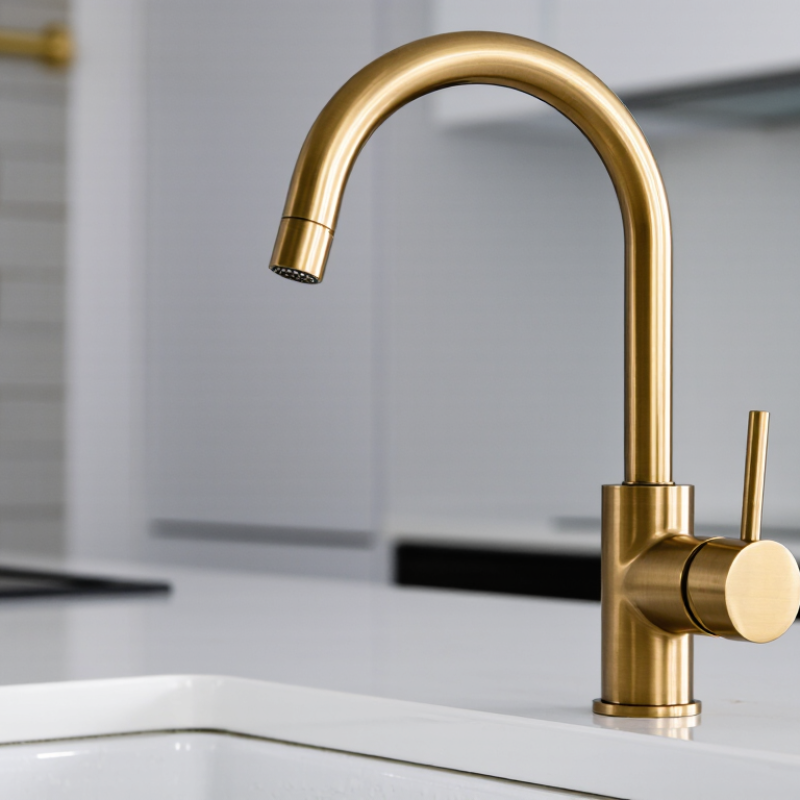
What Are the Best Solid Brass Faucets in 2026?

What Defines a Solid Brass Faucet and How Is It Made?

A solid brass faucet is made with a brass body, an alloy primarily of copper and zinc. The term describes the faucet’s core structure, not simply its visible color. Not just a finish. A brass-colored coating over another metal does not make the faucet solid brass. Internal parts, such as cartridges, seals, and aerators, may use different materials, so “solid” rarely means every component is brass.

The body is commonly produced by casting or forging brass into a rough shape. Workers then machine openings for water channels, the handle, and the spout. The piece is polished and inspected before a surface finish is applied, if one is specified. Small details matter: cleanly cut threads and smooth internal passages can support assembly and water flow. Still, the phrase “solid brass” can sound more absolute than it is.

For a careful comparison, check the product’s material description and technical specifications. A heavy feel alone does not confirm the body’s composition. Ask whether the stated material applies to the faucet body or only to selected parts. Brass can resist corrosion well, but performance also depends on alloy quality, manufacturing, and upkeep. The finish may show wear first, especially around frequently touched handles.

What Defines a Solid Brass Faucet—and How Is It Made?

Brass is an alloy made primarily of copper and zinc. This chart shows the specified composition ranges for C26000 cartridge brass, a standardized brass alloy—not a universal formula for every faucet.

The zinc share is the balance after copper and other permitted constituents. Faucet bodies may use different brass alloys and are commonly formed by casting, forging, or machining, then finished and assembled. Check the product specification to confirm the body material.

Reference: UNS C26000 composition limits; values shown as percentages by mass.

Which Features Matter When Choosing a Solid Brass Faucet?

When choosing a solid-brass faucet, check which parts are actually brass. Some models use brass bodies but different materials for handles, cartridges, or connecting parts. A clear specification matters more than a heavy feel. Weight can mislead.

Look for a ceramic-disc cartridge, replaceable seals, and a finish suited to frequent wiping and splashes. Ask for documentation on lead content in wetted components. NSF/ANSI/CAN 61 and NSF/ANSI 372 address drinking-water materials and lead content; certification details help verify claims. Check the spec sheet. Also measure the sink deck and spout reach. A spout that misses the drain can splash across the counter.

Flow rate matters, too. The U.S. EPA WaterSense program sets a maximum of 1.5 gallons per minute for labeled bathroom sink faucets, compared with the federal standard of 2.2 gallons per minute. EPA estimates that replacing old faucets or aerators with WaterSense-labeled options can save an average household about 700 gallons of water annually. That figure depends on use and the faucet replaced, so treat it as an estimate, not a guarantee. Choose a model with a replaceable aerator and readily available parts. A beautiful finish is useful, but maintenance should not become a guessing game.

How Do Faucet Types Suit Different Rooms and Uses?

What Are the Best Solid Brass Faucets in 2026?

How Do Faucet Types Suit Different Rooms and Uses?

The best solid brass faucet depends on the room, not just its material. In a busy kitchen, a high-arc pull-down faucet leaves space for stockpots and makes rinsing leafy greens easier. A single-handle design is convenient when your hands are messy. Check the spout reach against your sink; a faucet that looks elegant can still splash if it lands too close to the edge. Solid brass offers a substantial body, but cartridge quality and finish care matter too.

Bathrooms call for a different fit. A compact, low-arc faucet suits a shallow basin and limits splash, while a widespread model can work well on a larger countertop with separate handle holes. For a powder room, appearance may matter more than fast filling. In a tub or shower, choose controls and spouts designed for that fixture. They are not interchangeable with sink faucets. Small details matter.

Tips: Measure the sink holes, basin depth, and backsplash clearance before buying. Check that the faucet includes compatible connections, or confirm what parts are needed. Wipe water spots from the finish with a soft cloth. I would not assume heavier always means better; a poorly matched faucet can be frustrating, even when its brass body feels solid.

What Are the Best Solid Brass Faucet Options in 2026?

In 2026, solid brass faucet options range from compact single-hole designs to widespread, wall-mounted, and pull-down models. Choose by sink layout, not appearance alone. A widespread faucet needs separate deck holes; a single-hole model keeps the counter visually clean. Check the product specification carefully: “solid brass” may describe the body, while the handles, finish, or internal components use other materials. That distinction matters.

For bathroom sinks, compare flow rate as well as construction.

The U.S. EPA’s WaterSense faucet specification sets a maximum of 1.5 gallons per minute at 60 psi for labeled faucets, versus 2.2 gallons per minute for standard models—a reduction of about 30 percent.

The EPA’s WaterSense guidance also makes clear that this benchmark applies to bathroom faucets, not every kitchen faucet. Look for a clearly stated flow rate, replaceable cartridges, and a finish suited to frequent cleaning. Check warranty terms, too. Brass can be durable, but it does not make every design equally easy to repair. One small caveat: specifications can be harder to compare than polished product photos.

How Should Solid Brass Faucets Be Installed and Maintained?

Installing a solid brass faucet begins with checking the sink-hole spacing and confirming the shutoff valves work. Place a towel beneath the basin; even a small trapped amount of water can make a mess. Follow the faucet’s instructions, flush supply lines before connection, and tighten fittings carefully. Over-tightening can damage threads or washers. Use thread-seal tape only where the instructions call for it, not on compression fittings. A brass body can be durable, but cartridges, seals, and finish quality still matter.

For maintenance, wipe the faucet with mild soap and a soft cloth, then dry it to limit mineral spots. Avoid abrasive pads and harsh cleaners; they may dull or damage the finish. Remove and rinse the aerator if flow weakens. The U.S. Environmental Protection Agency’s WaterSense faucet specification sets a maximum flow rate of 1.5 gallons per minute, at least 30% below the 2.2-gpm standard. EPA also estimates household leaks waste nearly 10,000 gallons of water yearly, making routine checks worthwhile. Inspect under the sink for drips, especially after installation. Small leaks can be easy to miss.

Tips: Place a dry tissue around each connection after turning the water on. It reveals slow leaks. Check again the next day; I sometimes forget this step, and it is worth remembering.

FAQS

Which faucet parts should be made of solid brass?

Check the specification sheet. “Solid brass” may describe only the body, while handles or internal parts use other materials. Weight can mislead.

What should I look for in a faucet cartridge?

Choose a ceramic-disc cartridge with replaceable seals. Confirm that replacement parts are available, so a worn seal does not make repairs difficult.

How can I choose the right faucet layout?

Match the faucet to the sink holes and deck space. Widespread models need separate holes; single-hole models use one opening. Measure spout reach, too.

What flow rate should I consider for a bathroom faucet?

Labeled bathroom faucets may have a maximum flow rate of 1.5 gallons per minute. Standard models may reach 2.2 gallons per minute. Savings vary with use.

What documents should I check before buying?

Request documentation about lead content in parts that touch water. Check certification details and the stated flow rate, rather than relying on product photos.

What should I do before installing a faucet?

Check sink-hole spacing and make sure the shutoff valves work. Place a towel under the basin and flush supply lines before connecting them.

How should I clean a brass faucet?

Use mild soap and a soft cloth, then dry the surface. Avoid abrasive pads and harsh cleaners, which may dull the finish. Rinse the aerator if flow weakens.

How can I check for leaks after installation?

Turn on the water and press a dry tissue around each connection. It can reveal a slow drip. Check again tomorrow.

Does a brass body guarantee a durable, easy-to-repair faucet?

Not by itself. Cartridges, seals, finish quality, and available parts matter too. I might focus too much on the metal and overlook those details.

Conclusion

Solid Brass Faucets are made with brass bodies, valued for their strength, corrosion resistance, and substantial feel. Their quality depends on factors such as the composition and thickness of the brass, the durability of the finish, the reliability of the internal valve, and whether the faucet provides smooth, dependable control. When comparing options in 2026, consider how the design, water flow, handle arrangement, and installation requirements fit your needs, rather than choosing by appearance alone.

Different faucet styles suit different spaces: a compact, easy-to-clean model may work well in a bathroom, while a higher or pull-down design can be practical for a kitchen. Check that the faucet matches the sink and plumbing connections before installation, and follow the supplied instructions or consult a qualified installer if needed. Regularly wipe the surface with a soft cloth and mild cleaner, avoid abrasive products, and address drips or loose fittings promptly to help preserve performance and appearance.

Liam Carter

Liam Carter

Liam Carter is a seasoned marketing professional with a strong understanding of product strategy, customer needs, and market trends. As a key contributor to our company, he combines practical industry knowledge with clear, engaging communication to help readers better understand how our solutions......