Design & Architecture Journal
Bathroom Insights & Trends
10 Best Overhead Rain Shower Heads for 2026
Overhead Rain Shower Heads can make an ordinary bathroom feel calmer, but a wide spray pattern is only part of the story. Water pressure, ceiling height, pipe capacity, and head size all shape the experience. A large rain plate may look impressive in a showroom, then feel underwhelming at home if the plumbing cannot supply it well. Details matter.
Richard Trethewey, the longtime plumbing expert associated with This Old House, is known for emphasizing how plumbing systems affect fixture performance. A practical paraphrase of that lesson—not a verbatim quotation—is: “Check the system behind the wall before choosing the shower head.” It is easy to focus on polished brass, brushed nickel, or a broad canopy. Less exciting, but essential. Check the connection size, available flow, and whether the shower arm can support the head securely.
This guide compares 10 Best Overhead Rain Shower Heads for 2026, focusing on spray coverage, materials, installation needs, cleaning, and everyday usability. Some models offer adjustable settings; others keep the design deliberately simple. Neither approach suits every bathroom. We also consider the less glamorous trade-offs, including mineral buildup and the possibility that a gentle rainfall effect may not feel forceful enough for every user. Real bathrooms vary. So do expectations. The right choice should fit the room and the plumbing—not just the product photo.
What Defines an Overhead Rain Shower Head in 2026
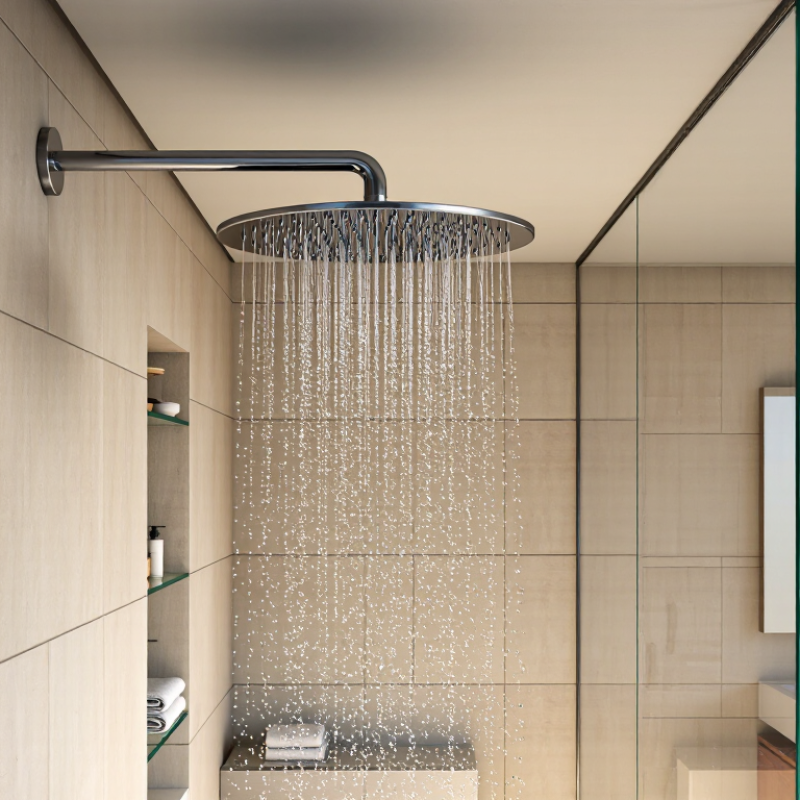
An overhead rain shower head is defined by its position and the way it spreads water. It usually sits above the user, mounted on the ceiling or an extended wall arm. A wide face with many outlets creates a soft, downward pattern rather than a narrow, forceful stream. Rain is partly a design promise. The real sensation depends on nozzle layout, water pressure, and head size. A large face may feel enveloping, but it can also expose uneven coverage when pressure is modest. Not always luxurious.
In practical terms, a good design balances coverage with everyday upkeep. Silicone outlets are easier to wipe when mineral deposits appear, while a simple shape has fewer awkward edges to clean. Check that the head fits the shower space and can direct water where people actually stand. A ceiling-mounted model may require more planning than an arm-mounted one, especially if plumbing needs adjustment. Finish matters too: fingerprints and water spots show more clearly on some surfaces. Small details count. Product descriptions can make “rain” sound consistent, yet spray warmth and softness vary from one bathroom to another. The label alone cannot tell you how it will feel.
How the Top 10 Rain Shower Heads Were Evaluated
To evaluate overhead rain shower heads, we compared spray coverage, water flow, materials, and installation needs. A broad faceplate can create a more enveloping spray, but only when household water pressure is adequate. We noted stated flow rates and head dimensions, then checked whether product instructions explained compatible connections and mounting requirements. Fit matters.
Comfort was assessed through spray-pattern descriptions and practical details, including adjustable angles, easy-clean nozzles, and the clearance needed above a shower stall. We favored clear specifications over vague claims like “spa-like.” Where hands-on testing was unavailable, we treated published specifications and owner feedback as useful clues, not proof. That distinction matters.
Durability and upkeep also shaped the ratings. Metal construction may feel sturdier, while silicone nozzles can be easier to wipe clean; neither detail guarantees long service life. We looked for accessible cleaning guidance, replaceable parts, and consistent reporting of leaks or finish wear. User reviews can reveal recurring problems, though a few complaints do not establish a defect. We also considered installation complexity, since an attractive head is less practical if its weight, arm length, or connection size does not suit the existing setup. Room height can be an overlooked constraint.
| # | Evaluation Dimension | Weight | How It Is Evaluated | What to Verify |
|---|---|---|---|---|
| 1 | Spray Coverage | 16% | Assess the spray pattern and how evenly water reaches the body during normal use. | Spray-face diameter and whether the spray is concentrated or broadly distributed. |
| 2 | Flow Rate and Water Use | 15% | Compare the stated gallons per minute (GPM) and, where possible, measured flow at a consistent pressure. | In the United States, the federal maximum is generally 2.5 GPM at 80 psi; WaterSense-labeled showerheads meet a 2.0 GPM maximum and applicable performance criteria. |
| 3 | Spray Comfort | 13% | Consider whether the spray feels consistent and comfortable rather than weak, harsh, or uneven. | Assess performance at the household’s available water pressure; perceived comfort varies by user and plumbing system. |
| 4 | Pressure Compatibility | 12% | Check manufacturer pressure requirements and compare operation under the same supply conditions. | Published operating-pressure range and any stated minimum pressure; actual flow can vary with plumbing and pressure. |
| 5 | Adjustability and Aiming | 10% | Review whether the head can be angled or adjusted to suit the shower layout and user height. | Joint range, mounting style, and compatibility with the intended arm or ceiling connection. |
| 6 | Installation Compatibility | 9% | Check connection type, included fittings, and whether installation requires changes to existing plumbing. | Thread standard, arm or ceiling-mount requirements, installation instructions, and stated tool needs. |
| 7 | Materials and Finish | 8% | Compare disclosed materials, finish options, and care instructions for a wet environment. | Material specifications and finish-care guidance; appearance alone does not establish durability. |
| 8 | Cleaning and Maintenance | 7% | Check how accessible the spray outlets are for routine cleaning and whether care guidance is provided. | Removable components, cleaning instructions, and any stated limitations on cleaners. |
| 9 | Warranty and Support | 6% | Review the written warranty, exclusions, and process for obtaining replacement parts or assistance. | Warranty duration and terms should be confirmed in current documentation; coverage differs by product and seller. |
| 10 | Overall Value | 4% | Compare price with verified features, included components, warranty coverage, and installation needs. | Use current, like-for-like prices; price and availability can change over time. |
| Total | 100% | Apply the same criteria and test conditions to every product being compared. | ||
Ten Standout Overhead Rain Shower Heads for 2026
For 2026, standout overhead rain shower heads offer different ways to balance coverage, comfort, and water use. A wide fixed head spreads water across the shoulders, while a compact head suits smaller enclosures. Adjustable-angle models help direct spray away from the door. Multi-spray designs offer a stronger rinse when a gentle rainfall feels too soft. Ceiling-mounted heads create a clean look, but need suitable plumbing. Wall-arm models are often simpler to replace. Slim profiles may suit low ceilings. Silicone nozzles are easy to wipe clean. Metal faceplates feel sturdy, though they can show water spots. Water-saving models can reduce flow, but check whether the pressure feels comfortable.
The right choice depends on more than appearance. Measure the shower space and check the connection size before buying. A very wide head may feel luxurious, yet uneven coverage can be frustrating if household water pressure is modest. Product specifications are useful, but real comfort varies with plumbing and personal preference. I would not assume the biggest head is automatically the best. Small details matter.
Tips: Wipe the nozzles regularly to limit mineral buildup. If possible, test the spray pattern in person. Check installation requirements before ordering. A little planning helps avoid an expensive mismatch.
Comparing Spray Patterns, Materials, and Installation
10 Best Overhead Rain Shower Heads for 2026: Comparing Spray Patterns, Materials, and Installation
A rain shower head should feel broad and steady, not merely look oversized. Wide-face models spread water across the shoulders, while smaller heads often deliver a more focused spray. Air-infused and adjustable patterns can change the sensation, but comfort depends on household pressure, too. A showroom impression is not a guarantee; I would check the spray in your own bathroom before judging it.
Material and mounting affect long-term use. Stainless steel and solid brass generally resist wear better than lightweight plastic, although finish quality and cleaning habits matter. Check the arm’s reach, ceiling clearance, and existing pipe position before buying. The U.S. EPA’s WaterSense showerhead guidance says certified models use no more than 2.0 gallons per minute, at least 20% less than the standard 2.5-gallon rate, while meeting performance criteria. That figure helps compare flow, but it cannot promise a satisfying feel in every home.
Tips: Measure twice. Confirm the connection type and available water pressure, then clean mineral deposits regularly. A large head can look impressive and still disappoint if the supply is weak.
How to Choose a Rain Shower Head for Your Bathroom
Choosing a rain shower head starts with your bathroom, not the product photo. Measure the shower area and check whether a ceiling mount or wall arm fits existing plumbing. A broad plate can look inviting, yet spray may reach cold tile or the curtain. I still think diameter gets too much attention. Check the spray pattern and your household’s preferred pressure, too.
Flow rate matters. The U.S. Department of Energy’s federal standard limits showerhead flow to 2.5 gallons per minute at 80 psi. EPA WaterSense-labeled models use no more than 2.0 gallons per minute; EPA estimates an average family could save 2,700 gallons of water yearly. These figures help compare options, but lower flow does not guarantee a satisfying spray. If possible, measure your current flow with a bucket and timer, or ask a plumber to check pressure.
Keep maintenance in view. Hard-water deposits can clog small nozzles, so look for easy-clean spray faces and accessible connections. Confirm the head’s dimensions leave enough clearance for people to move comfortably. Finishes matter less than fit, flow, and cleaning. A small detail, perhaps. Check local plumbing guidance before changing fittings, especially in older bathrooms.
FAQS
Measure the shower area, ceiling clearance, and existing pipe position. Fit matters more than a product photo.
No. A broad faceplate can cover your shoulders, but weak household pressure may make the spray disappointing. Bigger is not always better.
Wide patterns feel more enveloping, while smaller heads provide a more focused spray. Adjustable angles can help direct water away from cold tile.
Some efficiency-labeled models use up to 2.0 gallons per minute. The federal limit is 2.5 gallons per minute at 80 psi. Lower flow may still feel weak.
Compare your current flow with a bucket and timer, or ask a plumber to check pressure. A quick check helps.
Metal bodies may feel sturdier, and silicone nozzles can be easier to wipe clean. Neither guarantees long service life. Check cleaning instructions.
Check the connection type, arm reach, head weight, and ceiling clearance. An attractive head may not suit your existing setup.
Treat specifications and owner feedback as clues, not proof. Repeated reports of leaks may deserve attention, but a few complaints do not confirm a defect. I might still give dimensions too much weight.
Conclusion
This guide explores what defines Overhead Rain Shower Heads in 2026, including the broad, downward spray designed to create a gentle, immersive shower. It also explains how the top ten options are evaluated, with attention to spray coverage, water flow, construction, ease of maintenance, and overall practicality. The featured selections represent a range of designs and functions to suit different bathroom layouts and personal preferences.
A side-by-side comparison considers spray patterns, materials, and installation requirements, helping readers understand the trade-offs between different styles. The final section offers practical advice for choosing a shower head based on available space, plumbing setup, desired spray experience, and everyday needs. Together, these sections provide a clear framework for comparing options and finding a suitable fit for a bathroom without relying on brand-specific recommendations.

Blog Tags: