Choosing the Top Frameless Shower Enclosures for Global Buyers requires more than judging glass clarity or polished hardware. Buyers must examine safety standards, installation quality, water control, corrosion resistance, and long-term maintenance. A beautiful enclosure can still fail beside an uneven wall or poorly sealed threshold.
Market research supports this growing interest. Grand View Research identifies bathroom fixtures as a steadily expanding global category, driven by renovation activity, urban housing, and premium interior design. Houzz’s U.S. Bathroom Trends Study also shows continued investment in upgraded showers, larger formats, and cleaner visual layouts. These reports indicate demand, but they do not guarantee product quality. That difference matters.
Mike Foti, CEO of Innovate Building Solutions, describes frameless shower doors as “the Cadillac of shower doors.” The comparison is memorable. It also needs qualification. Frameless Shower Enclosures usually require thicker tempered glass, accurate measurements, stronger hinges, and better wall preparation. Those details increase cost and installation risk.
International buyers should compare compliance evidence, not attractive photographs. ANSI Z97.1 and CPSC 16 CFR 1201 are important references for safety glazing in the United States. EN 12150 is widely recognized for thermally toughened safety glass in European markets. Local requirements may differ.
The best enclosure is not always the largest one. It should match the bathroom’s structure, drainage, ventilation, and daily use. Small mistakes become visible quickly. This guide examines leading designs through a practical lens, while acknowledging an uncomfortable truth: premium glass cannot rescue careless installation.
What Defines a Frameless Shower Enclosure?
Top Frameless Shower Enclosures for Global Buyers?
What Defines a Frameless Shower Enclosure?
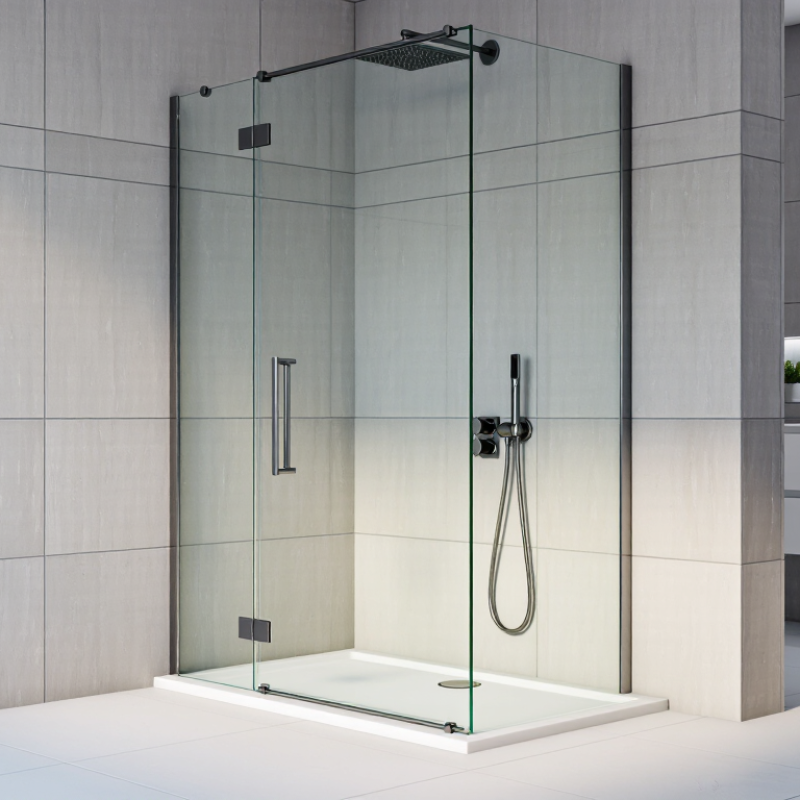
A frameless shower enclosure uses thick tempered safety glass with minimal visible metal framing. It is not completely hardware-free. Hinges, handles, clips, and seals still support the glass and control water movement. Most residential models use glass between 8 and 12 millimeters thick. Clear edges and carefully polished corners create the open appearance buyers expect.
The enclosure’s performance depends heavily on the installation surface. Walls must be plumb, solid, and properly waterproofed before glass arrives. Hinges need firm anchors, not just decorative fittings. A narrow bottom seal can reduce splashing, but it cannot correct a poorly sloped shower floor. That detail is often underestimated.
Global buyers should request glass safety documentation, hardware specifications, and installation tolerances. Requirements differ across regions, so one test report may not satisfy every market. Stainless steel or corrosion-resistant hardware usually performs better in humid bathrooms, although material grades still need verification. The term “frameless” is not perfectly standardized. Some products contain more supporting metal than their photos suggest. A careful buyer should inspect technical drawings, not rely only on showroom images. Even experienced installers can miss small alignment issues when walls are uneven.
What Defines a Frameless Shower Enclosure?
Frameless shower enclosures are primarily defined by thick tempered safety glass, minimal visible metalwork, and structural support from hinges, clips, channels, and wall connections. The glass thicknesses shown represent common specifications used in residential shower enclosures; exact requirements may vary by local building codes, installation design, and manufacturer approval.
What Safety, Installation, and Maintenance Standards Matter?
Top Frameless Shower Enclosures for Global Buyers
Safety begins with certified materials, not attractive photographs. Choose properly treated safety glass with polished edges and clearly documented thickness. Requirements differ between countries, so request test reports and confirm local building rules before ordering. A small chip near a hinge can become a serious failure. Inspect every panel before installation.
Installation quality matters just as much. The wall must be plumb, solid, and able to support the hardware. Anchors should suit the wall structure, not merely the tile surface. Doors need controlled clearance and must open safely toward a dry area when possible. Sealant should be applied neatly, but it should not hide gaps or movement. Water testing after installation can reveal leaks that photographs never show.
Tips: Use a professional installer familiar with frameless systems. Measure twice, including ceiling height and door swing. Keep a written record of glass specifications, hardware finishes, and inspection dates. Clean the enclosure weekly with a soft squeegee and mild, pH-neutral cleaner. Avoid abrasive pads and harsh chemicals, which can damage coatings and seals. Check hinges, handles, and silicone joints every few months. Some maintenance guides sound simple, yet busy households often ignore them. That is the weakness. Even a high-quality enclosure needs regular attention.
How Can Global Buyers Evaluate Suppliers, Costs, and Shipping?
Top Frameless Shower Enclosures for Global Buyers?
Global buyers should evaluate the supplier before comparing the lowest quotation. Ask for tempered-glass test reports, edge-polishing records, hardware specifications, and documented quality procedures. EN 12150 is a useful reference for thermally toughened safety glass. A reliable supplier should also explain glass thickness, commonly 8, 10, or 12 millimeters, and show how door weight affects hinges and wall fixings. Request a sample corner, not only photographs. Small defects become obvious under bathroom lighting.
Cost analysis needs more than the factory price. Separate glass, hardware, packaging, inland transport, ocean freight, insurance, duties, port charges, and local installation. The World Bank’s Logistics Performance Index 2023 shows major differences in customs efficiency and shipment timeliness between markets. Those differences can change the real landed cost. A cheaper quote may become expensive after storage or inspection delays. I have seen buyers overlook replacement panels. That is an uncomfortable mistake.
Shipping requires precise measurements. Record crate length, width, height, gross weight, and cubic volume before booking freight. UNCTAD’s Review of Maritime Transport reports that maritime transport carries over 80% of global merchandise trade, but congestion and route disruption still affect delivery reliability. Use moisture-resistant crates, reinforced corners, shock indicators, and clear panel labels. Confirm whether the supplier provides door-to-port or door-to-door service. Incoterms should be written clearly. One missing responsibility can create a costly dispute. Suppliers should provide packing photos and a pre-shipment inspection record. Reflect carefully here: even a perfect enclosure is useless if it arrives scratched.
Conclusion
Frameless Shower Enclosures are defined by their minimal use of visible framing, relying on precisely engineered tempered glass, discreet hinges, channels, and support hardware to create a clean, open appearance. Global buyers should compare glass thickness, clarity, edge finishing, hardware materials, door swing options, and configurations such as sliding, pivot, corner, or walk-in designs. The best choice depends on bathroom size, wall position, entry clearance, ventilation, and the desired balance between accessibility and privacy.
Safety and long-term performance require certified safety glass, accurate measurements, professional installation, reliable waterproofing, and hardware suitable for humid environments. Buyers should also review cleaning requirements, replacement-part availability, packaging quality, lead times, shipping terms, and import documentation. A careful supplier evaluation should include product specifications, quality-control procedures, customization capabilities, installation guidance, and a transparent total cost that covers glass, hardware, protection, freight, and potential local fees.