QUEO Luxury Bathroom — Design Journal & Articles

Design & Architecture Journal

Bathroom Insights & Trends

0%

Choosing the right Dual Flush Plates for international projects is more complicated than matching a finish to a bathroom wall. Global buyers must examine cistern compatibility, actuation force, water-saving performance, material quality, and replacement access. A polished chrome plate may look impressive under showroom lighting, yet a weak spring or poor fit can create daily frustration. Small details matter.

Michael R. Vestergaard, a sanitary hardware engineer with more than twenty years of field experience, says, “A flush plate is touched every day, so reliability must be felt, not advertised.” His observation reflects a practical truth. The best plate should operate smoothly, resist fingerprints, and remain stable after thousands of presses. It should also suit concealed cistern systems commonly used in the target market. Not every universal claim deserves trust.

This guide compares 2026’s leading Dual Flush Plates for residential, hospitality, and commercial applications. It considers stainless steel, ABS, glass, and antimicrobial surfaces. It also reviews button clarity, installation depth, cleaning effort, packaging, and long-term serviceability. For global procurement teams, shipping protection and technical documentation deserve equal attention. A beautiful product becomes a poor purchase when spare parts are unavailable.

The evaluation is not flawless. Regional installation habits differ, and product data can change between batches. Buyers should verify current specifications with manufacturers before ordering large quantities. Field testing remains valuable. Press the plate. Check the return action. Listen for rattling. Then choose the model that balances design, dependable performance, and realistic maintenance costs.
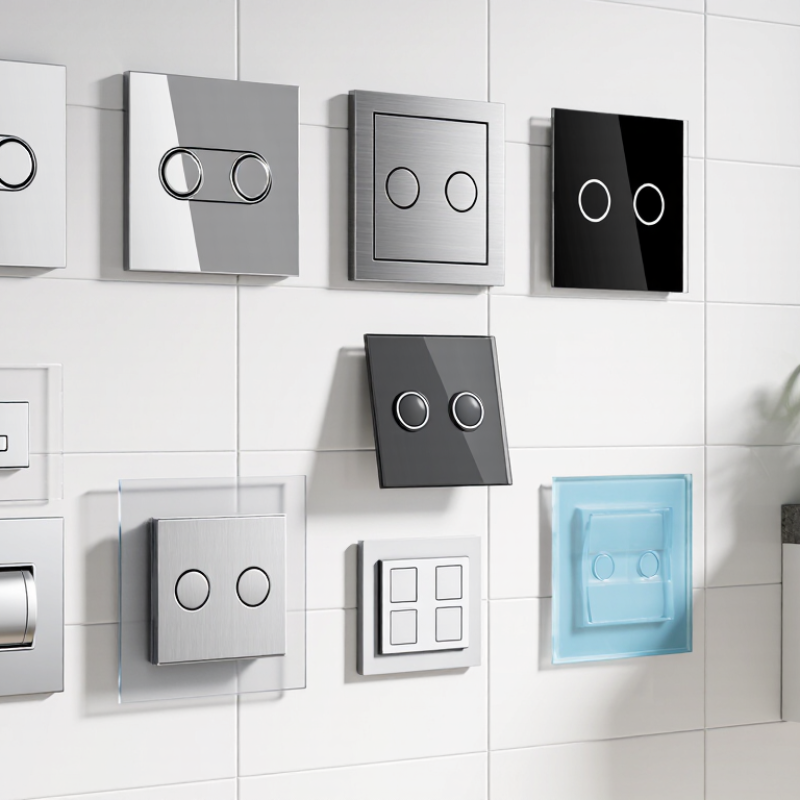
2026 Best Dual Flush Plates for Global Buyers?

What Are Dual Flush Plates and How Do They Work?

Dual flush plates control two different water volumes through separate buttons. The smaller button usually releases water for liquid waste. The larger button activates a stronger flush for solid waste. Behind the plate, a cable, rod, or pneumatic mechanism lifts the cistern valve. The plate itself does not move water. It transfers the user’s pressure to that valve.

Typical systems use about 3 litres for a reduced flush and 6 litres for a full flush. Actual performance depends on the cistern, valve setting, pipe design, and installation quality. The U.S. Environmental Protection Agency reports that toilets consume nearly 30% of residential indoor water use. Its WaterSense criteria limit qualifying toilets to 1.28 gallons per flush, or about 4.8 litres, which is at least 20% below the standard 1.6-gallon model. These figures explain why dual flush plates attract global buyers.

A good plate should provide clear button resistance and reliable spring return. During practical checks, a loose actuator can cause incomplete flushing or continuous water loss. That detail is easy to miss. User habits also matter; many people press the full-flush button every time. In my view, laboratory savings can look too optimistic in real homes. Buyers should verify compatibility with the concealed cistern, local plumbing standards, moisture exposure, and replacement-part availability. The European Commission’s water-efficiency studies also emphasize product performance across the use phase, not appearance alone. A plate can look premium and still operate poorly.

2026 Best Dual Flush Plates for Global Buyers: What Are Dual Flush Plates and How Do They Work?

A dual flush plate controls two flush volumes: a reduced flush for liquid waste and a full flush for solid waste. The comparison below models annual water use for common nominal flush configurations using five reduced flushes and two full flushes per day over 365 days.

Calculation basis: annual water use = [(5 × reduced flush volume) + (2 × full flush volume)] × 365. Actual performance depends on local plumbing standards, toilet design, user behavior, and flush settings. Nominal volumes should be verified before purchase.

Which Features Define the Best Dual Flush Plates in 2026?

In 2026, the best dual flush plate is not simply the brightest or most decorative. It must deliver clear, dependable control every day. A strong plate separates the reduced flush from the full flush through distinct buttons, symbols, or tactile height. This detail matters in dim bathrooms and for users with limited vision. Many reliable models use corrosion-resistant metal or high-grade polymer, with a sealed surface that tolerates water spots and repeated cleaning. The finish should stay stable after thousands of presses, not only during showroom inspection. Small details matter.

From installation experience, compatibility is the first technical checkpoint. Buyers should confirm the cistern mechanism, cut-out dimensions, mounting depth, and actuator travel before ordering. A universal claim is not enough. Adjustable rods, firm clips, and accessible replacement parts reduce fitting errors across different markets. The plate should press smoothly, return quickly, and avoid a loose rattle. I also look for simple cleaning edges; narrow grooves collect soap and dust. Accessibility deserves equal attention: readable icons, moderate pressing force, and a surface that remains usable with wet fingers improve daily safety. Testing samples over time is wise, although many purchasing teams skip it under deadline pressure. That shortcut can become an expensive lesson. Packaging, instructions, and consistent quality checks also reveal whether a supplier is dependable. Not every attractive plate deserves a high rating.

How to Compare Materials, Compatibility, and Flush Performance

Choosing a dual flush plate for global projects requires more than checking its appearance. Material affects durability, cleaning, and long-term feel. Stainless steel resists moisture and usually suits busy commercial washrooms. ABS plastic is lighter and often more affordable, but surface scratches may appear sooner. Glass can look refined, yet fingerprints and impact risks deserve attention.

Compatibility is equally important. Confirm the cistern type, mounting points, plate dimensions, and actuator connection before ordering. A plate may fit the wall opening but fail to operate the internal mechanism. Local installation practices also vary. Ask for technical drawings, adjustment ranges, and spare-part availability. A perfect match on paper can still feel wrong during installation. Measure twice.

Tips: Test the small and large flush buttons with the actual cistern. Check water volume, refill speed, noise, and bowl clearance. The smaller button should remove light waste without repeated flushing. The larger button must provide a strong, consistent rinse. For international buyers, compare performance under different water pressures, not only laboratory conditions. Look for clear testing records and corrosion information. Some specifications seem impressive but lack practical detail. That deserves caution. Also inspect the plate after repeated pressing. A loose button, uneven return, or fading symbol can reveal weak construction early.

2026 Best Dual Flush Plates for Global Buyers? — How to Compare Materials, Compatibility, and Flush Performance
Plate / System Type Common Surface Material Typical Dual-Flush Settings Actuation and Compatibility Durability and Maintenance Flush Performance Considerations Best Use Case Buyer Check Before Ordering
Mechanical cable-operated plate ABS, ABS with plated finish, or stainless steel Usually 6/3 L or 4.5/3 L per flush; actual volumes depend on the cistern valve adjustment Uses flexible cables connected to a concealed flush valve. Usually suited to front- or top-access cisterns designed for cable actuation. Light operating force and simple servicing. Cable routing must avoid sharp bends and excessive tension. Flush volume is controlled mainly by the internal valve, seal, water level, and bowl design rather than by the plate itself. Most common replacement choice Confirm cable length, connector type, button travel, opening dimensions, and the required front/top installation position.
Pneumatic dual-flush plate ABS, glass, stainless steel, or zinc alloy Common nominal settings include 6/3 L and 4.5/3 L; settings vary by flush valve Uses air tubes between the push buttons and the flush valve. Requires a compatible pneumatic valve and correctly sized air tubes. Low mechanical load on the plate and good resistance to minor alignment differences. Air tubes must be protected from kinks and water damage. Can provide consistent button operation, but the final flush result still depends on the valve flow rate, cistern water level, and pan hydraulics. Flexible concealed-cistern layouts Check the number and diameter of air tubes, tube length, valve compatibility, button depth, and access clearance.
Direct rod-operated plate ABS, plated zinc alloy, or stainless steel Frequently configured at 6/3 L; other nominal settings are possible with the matching flush valve Push rods act directly on the flush valve. Compatibility is highly dependent on rod length, button spacing, and cistern geometry. Fewer flexible parts than cable systems. Incorrect rod adjustment can cause partial flushing, sticking, or continuous water flow. Offers direct actuation, but the push force and reliability depend on precise alignment between the plate and valve. Simple, rigid installations Measure the cistern opening, rod projection, center-to-center button spacing, and adjustment range before purchase.
ABS plastic plate Molded ABS with painted, plated, or matte coating Normally paired with 6/3 L, 4.5/3 L, or 4.8/3 L valve settings Can be used with cable, pneumatic, or direct-rod mechanisms, but the operating mechanism is not universal. Lightweight, impact-resistant, and generally economical. Coatings can wear or discolor from abrasive cleaners and prolonged moisture exposure. Material has no direct effect on flush capacity. Confirm that the flush valve has adequate discharge performance for the connected pan. Budget and high-volume projects Check coating quality, UV exposure, cleaning-product resistance, button return action, and replacement-part availability.
Stainless steel plate Commonly stainless steel grade 304; grade must be verified from the product specification Usually matched with 6/3 L or 4.5/3 L dual-flush valves Available with mechanical, pneumatic, or direct-rod actuation. The plate material does not guarantee mechanism compatibility. Good resistance to impact, humidity, and routine cleaning. Chloride-rich cleaners can cause staining or corrosion if the surface is not rinsed. Flush performance is determined by the concealed valve and ceramic pan. A rigid plate may require accurate installation alignment. Commercial and humid environments Verify stainless grade, sheet thickness, edge finish, mounting method, fingerprints, and resistance to the intended cleaning chemicals.
Zinc-alloy plate Die-cast zinc alloy with chrome, brushed, painted, or other protective finish Commonly paired with 6/3 L, 4.5/3 L, or 4.8/3 L valve settings May support cable, pneumatic, or rod actuation. Compatibility must be checked against the concealed cistern mechanism. Rigid and substantial with a premium feel. Surface damage can expose the base metal and allow corrosion in persistently wet conditions. Provides stable button movement when correctly mounted, but it does not increase the flushing power of the internal valve. Premium appearance and solid feel Check coating thickness, corrosion protection, button load, mounting clips, plate flatness, and bathroom humidity conditions.
Tempered-glass plate Tempered safety glass combined with a metal or polymer support frame Typically offered with 6/3 L or 4.5/3 L valve configurations Usually requires a dedicated pneumatic or concealed mechanical support system. Glass dimensions and mounting hardware are often system-specific. Easy to wipe and visually distinctive. Tempered glass is stronger than ordinary glass but can still break after severe impact or edge damage. Touch feel and flush volume depend on the buttons and valve behind the glass, not on the glass panel. Design-led residential bathrooms Confirm safety-glass specification, edge protection, fixing method, replacement availability, and compatibility with the cistern frame.
Water-saving dual-flush configuration Any compatible plate material Typical nominal options: 4.5/3 L or 6/3 L. The smaller flush is commonly used for liquid waste and the larger flush for solid waste. Requires a dual-flush valve, correctly calibrated button mechanism, and a cistern designed for the selected flush volumes. Reduced water use is achievable only when the valve seals correctly and users select the appropriate flush button. Check certified flush-volume data, bowl-clearing performance, refill time, leak rate, and compatibility with local plumbing requirements. Water-efficiency projects Do not compare plate appearance alone; request the valve’s nominal and measured flush volumes and the applicable local compliance documentation.
Important comparison note: A flush plate is the user interface, while the concealed flush valve, cistern water level, inlet flow, trapway, and ceramic pan determine most of the actual flushing performance. Flush volumes shown above are common nominal configurations, not universal values. Always verify the installation opening, actuation method, button spacing, cable or air-tube specifications, and applicable local plumbing standards before ordering.

What Standards and Installation Requirements Vary by Global Market?

2026 Best Dual Flush Plates for Global Buyers?

A dual flush plate is not globally interchangeable. Local standards shape its valve, opening size, and installation method. In the United States, EPA WaterSense specifications limit qualifying toilets to 1.28 gallons per flush, or less. WaterSense also reports that toilets use nearly 30% of household indoor water. This makes flush performance more than a design issue.

European projects often reference EN 14055 for flushing cisterns and EN 997 for toilet performance. These requirements can affect inlet valves, overflow protection, and testing procedures. Australia uses the Water Efficiency Labelling and Standards scheme, where rated products must meet strict water-use and performance criteria. In China, buyers should check current GB standards and local plumbing rules before selecting a plate. Small differences matter. A 3/6-litre button may not match a concealed cistern designed for another ratio.

Tips: Confirm the cistern model, flush volume, wall thickness, and service opening before ordering. Check whether the plate uses mechanical rods, cables, or pneumatic control. Ask for test reports, installation drawings, and replacement-part availability. The UN World Water Development Report 2024 highlights growing water stress worldwide, so efficient flushing deserves attention. Yet efficiency claims can mislead when installation is poor. A slightly misaligned actuator may cause repeated flushing, wasted water, and customer complaints. Regional certification is useful, but it cannot replace an installer’s field check.

How Should Buyers Select, Install, and Maintain a Dual Flush Plate?

Selecting a dual flush plate starts with the concealed cistern, not the bathroom color. Check the cistern’s manufacturer, actuator type, opening size, and button travel before ordering. Measure the finished wall opening twice, especially after tile or stone has been fitted. Check twice. A compatible plate should press smoothly and return without sticking. Look for durable, moisture-resistant material and clear separation between full and reduced flush controls. Local water-efficiency rules may also affect suitable flush volumes. Do not trust a product photo alone.

During installation, isolate the water supply and protect the plate from grout dust. Set the actuator rods according to the cistern instructions, leaving slight free movement. Rods cut too short may fail to trigger the valve; rods cut too long can cause constant pressure. Test both buttons before sealing the access area. Flush several times. Then inspect the valve for leaks. An experienced installer will also check that the plate sits level with the finished wall. Small alignment errors become obvious under bright bathroom lighting.

Wipe the surface with a soft cloth and mild cleaner. Abrasive powder, strong acids, and rough pads can damage the finish. Every few months, check button movement and listen for water running after flushing. If the smaller flush seems weak, inspect the inlet filter and valve settings before replacing parts. Fit matters. Maintenance records help facility managers notice repeated faults. Still, installation advice is not infallible. Wall thickness, water pressure, and aging seals can change performance. Recheck the actual fit on site.

FAQS

What features define a dependable dual flush plate?

It should clearly separate reduced and full flush controls. Distinct symbols, button sizes, or heights help in dim bathrooms. Small details matter. The surface should resist moisture, cleaning, and repeated pressing. Buttons must return quickly without rattling.

How can buyers check compatibility before ordering?

Confirm the concealed cistern, actuator type, opening size, mounting depth, and button travel. Check the mounting points and actuator connection too. A plate may fit the wall opening but fail internally. Measure twice. Universal claims alone are not enough.

Which materials suit different bathroom conditions?

Stainless steel handles moisture and frequent cleaning well. ABS plastic is lighter and often costs less. However, plastic may show scratches sooner. Glass looks refined but reveals fingerprints and may break after impact. The best choice depends on use, not appearance alone.

How should flush performance be tested?

Test both buttons with the actual concealed cistern. Check water volume, refill speed, noise, and bowl clearance. The reduced flush should remove light waste without repeated flushing. The full flush should rinse consistently. Test it under different water pressures.

What installation steps help prevent operating problems?

Isolate the water supply before installation. Protect the plate from grout dust. Adjust the actuator rods according to the cistern instructions. Rods that are too short may not trigger the valve. Rods that are too long may create constant pressure. Test both buttons before closing the access area.

How should a dual flush plate be maintained?

Wipe it with a soft cloth and mild cleaner. Avoid abrasive powders, strong acids, and rough pads. Every few months, check button movement and listen for running water. If the reduced flush weakens, inspect the inlet filter and valve settings. Replacement may not be necessary.

What accessibility details should buyers consider?

Choose readable symbols and moderate pressing force. Raised buttons can help users distinguish flush options by touch. The surface should remain usable with wet fingers. Clear controls matter in low light. This point is easy to underestimate.

How can buyers judge long-term quality?

Inspect the plate after repeated pressing, not only from a showroom sample. Look for loose buttons, uneven return, fading symbols, and surface changes. Review packaging, instructions, testing records, and spare-part access. Deadline pressure often discourages long testing. That shortcut can become expensive.

Conclusion

This guide explains how Dual Flush Plates operate and why they are an important part of modern water-saving toilet systems. By offering separate controls for reduced and full flushes, they help users match water volume to different needs. The article examines the features that define high-quality options in 2026, including responsive operation, clear symbols, durable finishes, easy cleaning, reliable return mechanisms, and compatibility with concealed cistern systems.

It also provides a practical framework for comparing materials, actuator design, flush performance, and long-term durability. Because installation dimensions, plumbing requirements, accessibility expectations, and product certifications can differ between global markets, buyers should verify local standards and system compatibility before purchase. The guide concludes with advice on selecting the correct plate, confirming measurements, installing it securely, and maintaining it through regular cleaning and basic mechanism checks. Together, these considerations help buyers achieve dependable performance, efficient water use, and a well-integrated bathroom installation.

Ethan

Ethan

Ethan is a dedicated marketing professional with a deep understanding of the company’s products, customers, and industry landscape. Through clear communication and thoughtful content, he helps audiences discover practical solutions that support their business goals and everyday needs. His expertise......